Why It Pays to Upgrade Your Stair Railing in an Aging Commercial Building

Buildings age quietly. The mechanical systems get attention, the roof gets inspected, the lobbies get refreshed, but the railings tend to stay until something goes wrong. For building owners and asset managers who think in terms of return, the decision to upgrade a stair railing in a 30-plus-year-old property isn’t just a maintenance call. It’s a financial one, and the numbers make a stronger case than most people expect.
How Age Affects a Stair Railing System

A stair railing system installed in the early 1990s was built to meet the codes, standards, and design expectations of that era. A lot has changed since then. The International Building Code has been updated multiple times, ADA requirements have been expanded, and load and spacing standards have evolved in ways that older installations weren’t designed to meet.

On top of compliance, the materials themselves have had three decades of contact, cleaning chemicals, humidity cycles, and mechanical stress working against them. Painted steel corrodes from the inside out. Welded joints fatigue. Anchors loosen. What looks like a functional railing on a casual walkthrough may be carrying deficiencies that only become obvious once something fails, and by then, the cost of addressing it is far higher than a planned upgrade.

The Real Cost of Waiting

A stair railing upgrade doesn’t always feel urgent the way a roof leak or an HVAC failure does, and the capital can always seem better spent elsewhere. But deferred railing work compounds. The longer an aging system stays in place, the more it costs in ways that go well beyond the price of the upgrade itself.

Here’s where those costs actually accumulate:

Deferred Maintenance That Multiplies

Every repair on an aging commercial stair railing is a temporary fix applied to a system that is already past its service horizon. Over three to five years, the cumulative cost of reactive maintenance on an aging railing system frequently approaches, and sometimes exceeds, the cost of a planned replacement. The difference is that the planned replacement leaves you with a new, warrantied system. The repair cycle leaves you with the same old one.

Liability That Grows With Every Incident

An aging railing that isn’t up to current code is a liability that sits on the balance sheet whether it’s acknowledged or not. A slip, a fall, or a structural failure involving a non-compliant railing opens the door to legal exposure that can dwarf the cost of the upgrade many times over. Insurance carriers are also paying closer attention to deferred capital improvements, particularly on properties approaching refinancing or sale. A railing system flagged during a property condition assessment can delay a transaction and trigger escrow holdbacks.

Lost Asset Value That’s Hard to Recover

Commercial railing systems are a recognized driver of perceived and appraised property value, particularly in multi-story buildings where stairwells, mezzanines, and open floor plates are central to how the space reads. An aging stair railing sends a signal to prospective tenants, buyers, and lenders that the asset hasn’t kept pace. That signal is hard to offset with other improvements, because railings run through every shared circulation path in the building.

Where the Replacement ROI Comes From

When owners and asset managers decide to upgrade a stair railing in an aging property, the return tends to show up across several categories at once. Understanding the full picture makes the business case significantly easier to build and approve.

  • Reduced maintenance spend: A new system under warranty eliminates the reactive repair cycle that quietly drains operating budgets on aging installations. Modern materials and finishes are engineered to resist corrosion and surface wear.
  • Code compliance and inspection confidence: Bringing a stair railing system up to current IBC and ADA standards removes a known liability and supports cleaner outcomes during city inspections, insurance audits, and property condition assessments.
  • Appraised value support: Capital improvements to shared circulation areas are documented and recognized in commercial appraisals. A railing upgrade is a tangible, photographable improvement that supports value narratives.
  • Competitive positioning: In markets where tenants have options, modernizing an older commercial building changes how the property competes during leasing. Clean, contemporary railings communicate that the building is actively managed and worth the rent being asked.
  • Lower long-term cost of ownership: Hiring the right installation partner and investing in a quality system upfront consistently costs less over a ten-year horizon than cycling through repairs on a system that’s already failing.

P+P Artec’s turnkey process covers everything from design and engineering to fabrication and installation under one roof, which means fewer handoffs, tighter timelines, and a finished system that actually matches what was specified.

Choosing the Right System for an Older Building

Not every railing system is a good fit for a 30-plus-year-old building, and material choice matters more in retrofit conditions than in new construction. Older substrates, irregular dimensions, and existing finishes all factor into what will perform well over the long term.

The two materials that consistently prove themselves in these conditions are glass and stainless steel, and knowing which material to choose when you upgrade the stair railing in a retrofit context can make sure the system holds up for decades.

Glass Railing

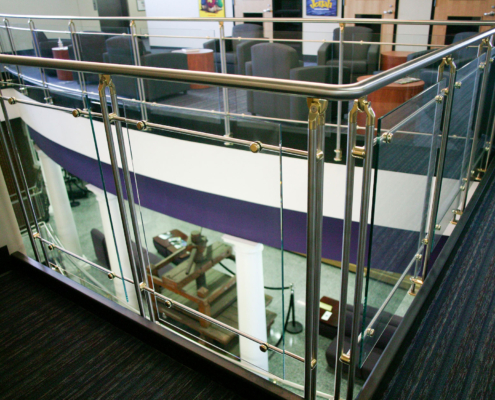
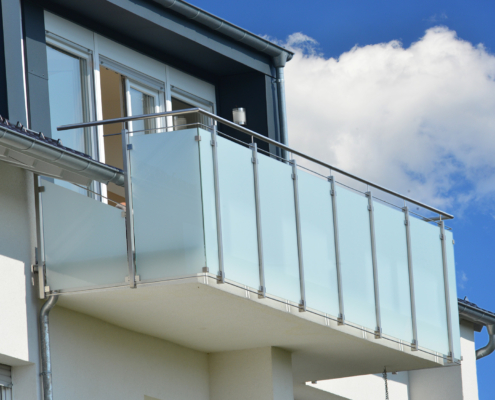
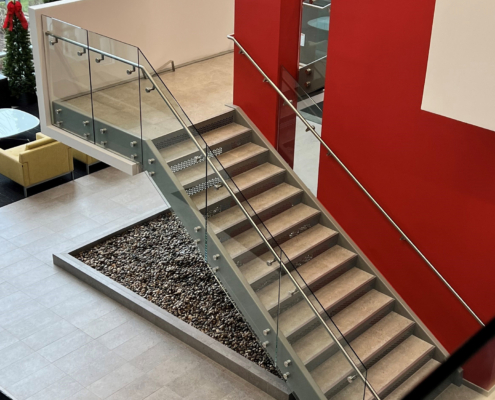
A glass railing is one of the most effective ways to signal that an older building has been genuinely updated, not just patched. Glass panels open up sightlines in stairwells and atrium edges, allow natural light to move through circulation spaces, and create a visual language that reads as current regardless of when the building was originally constructed.

Properly engineered with tempered or laminated panels and code-compliant hardware, a glass system also carries a durability profile that holds up well in both interior and sheltered exterior applications. Working with a fabricator who knows the signs that a building’s railing needs attention ensures the new system is specified to handle the real conditions of the space.

Stainless Steel Railing

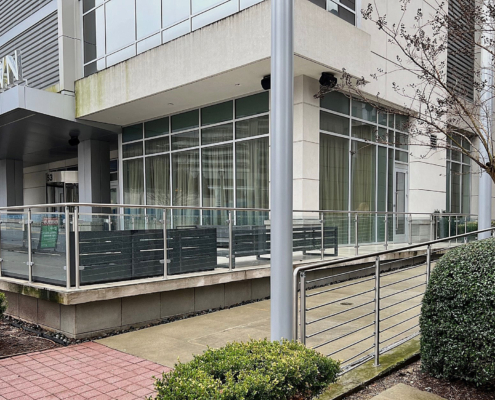
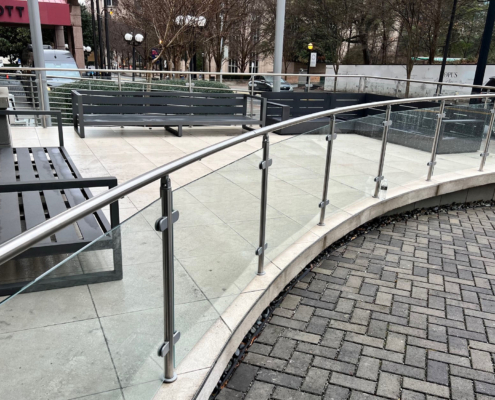
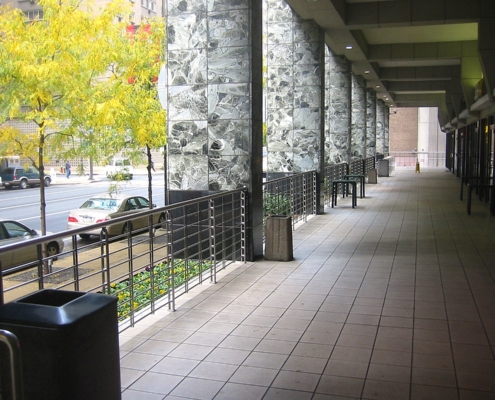
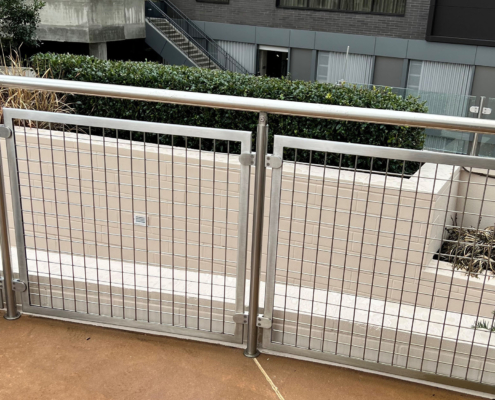
A stainless steel railing brings a different set of advantages that make it especially well-suited to the demands of aging commercial buildings. It doesn’t corrode, doesn’t need repainting, and holds its finish under the kind of daily contact and cleaning that high-traffic stairwells generate over decades. For buildings with exterior stair and balcony exposure, stainless steel is one of the most defensible long-term investments available.

It also adapts well to the dimensional variability that older buildings typically present, since it can be fabricated to precise measurements rather than forced into catalog assumptions. When the goal is a system that performs as well in year fifteen as it does on installation day, stainless steel is the material that consistently delivers on that promise.

How to Make the Business Case Internally

Getting ownership or a board to approve a stair railing upgrade in a 30-year-old building is easier when the pitch is framed around risk reduction and return. The aesthetics matter, but decision-makers who control capital respond to financial logic first. Here’s a framework that tends to move the conversation forward:

  • Document the current cost of maintenance on existing railing sections. Even a rough tally of recent years’ work orders makes the case for replacement more concrete
  • Get a property condition assessment or inspection report that flags railing deficiencies in writing, which creates a formal record of risk
  • Tie the project to an upcoming financing event, like refinancing, sale preparation, or a lease renewal cycle to give the upgrade a clear financial context
  • Frame the upgrade as a capital improvement, not a repair, so it’s treated as an asset investment in the budget process rather than an operating expense
  • Ask the right questions of your installation partner upfront. Understanding scope, phasing, and total cost clearly makes the selection process easier to present

Talk to P+P Artec About Your Building’s Upgrade Path

P+P Artec has spent more than 30 years designing, fabricating, and installing stainless steel and glass railing systems in commercial buildings of all ages and conditions, and our team can help you scope the right solution and plan around your building’s specific constraints.

Reach out to P+P Artec and start the conversation about what an upgrade looks like for your property.

Why It Pays to Upgrade Your Stair Railing in an Aging Commercial Building

Hook: Buildings age quietly. The mechanical systems get attention, the roof gets inspected, the lobbies get refreshed, but the railings tend to stay until something goes wrong. For building owners and asset managers who think in terms of return, the decision to upgrade a stair railing in a 30-plus-year-old property isn’t just a maintenance call. It’s a financial one, and the numbers make a stronger case than most people expect.
How Age Affects a Stair Railing System

A stair railing system installed in the early 1990s was built to meet the codes, standards, and design expectations of that era. A lot has changed since then. The International Building Code has been updated multiple times, ADA requirements have been expanded, and load and spacing standards have evolved in ways that older installations weren’t designed to meet.

On top of compliance, the materials themselves have had three decades of contact, cleaning chemicals, humidity cycles, and mechanical stress working against them. Painted steel corrodes from the inside out. Welded joints fatigue. Anchors loosen. What looks like a functional railing on a casual walkthrough may be carrying deficiencies that only become obvious once something fails, and by then, the cost of addressing it is far higher than a planned upgrade.

The Real Cost of Waiting

A stair railing upgrade doesn’t always feel urgent the way a roof leak or an HVAC failure does, and the capital can always seem better spent elsewhere. But deferred railing work compounds. The longer an aging system stays in place, the more it costs in ways that go well beyond the price of the upgrade itself.

Here’s where those costs actually accumulate:

Deferred Maintenance That Multiplies

Every repair on an aging commercial stair railing is a temporary fix applied to a system that is already past its service horizon. Over three to five years, the cumulative cost of reactive maintenance on an aging railing system frequently approaches, and sometimes exceeds, the cost of a planned replacement. The difference is that the planned replacement leaves you with a new, warrantied system. The repair cycle leaves you with the same old one.

Liability That Grows With Every Incident

An aging railing that isn’t up to current code is a liability that sits on the balance sheet whether it’s acknowledged or not. A slip, a fall, or a structural failure involving a non-compliant railing opens the door to legal exposure that can dwarf the cost of the upgrade many times over. Insurance carriers are also paying closer attention to deferred capital improvements, particularly on properties approaching refinancing or sale. A railing system flagged during a property condition assessment can delay a transaction and trigger escrow holdbacks.

Lost Asset Value That’s Hard to Recover

Commercial railing systems are a recognized driver of perceived and appraised property value, particularly in multi-story buildings where stairwells, mezzanines, and open floor plates are central to how the space reads. An aging stair railing sends a signal to prospective tenants, buyers, and lenders that the asset hasn’t kept pace. That signal is hard to offset with other improvements, because railings run through every shared circulation path in the building.

Where the Replacement ROI Comes From

When owners and asset managers decide to upgrade a stair railing in an aging property, the return tends to show up across several categories at once. Understanding the full picture makes the business case significantly easier to build and approve.

  • Reduced maintenance spend: A new system under warranty eliminates the reactive repair cycle that quietly drains operating budgets on aging installations. Modern materials and finishes are engineered to resist corrosion and surface wear.
  • Code compliance and inspection confidence: Bringing a stair railing system up to current IBC and ADA standards removes a known liability and supports cleaner outcomes during city inspections, insurance audits, and property condition assessments.
  • Appraised value support: Capital improvements to shared circulation areas are documented and recognized in commercial appraisals. A railing upgrade is a tangible, photographable improvement that supports value narratives.
  • Competitive positioning: In markets where tenants have options, modernizing an older commercial building changes how the property competes during leasing. Clean, contemporary railings communicate that the building is actively managed and worth the rent being asked.
  • Lower long-term cost of ownership: Hiring the right installation partner and investing in a quality system upfront consistently costs less over a ten-year horizon than cycling through repairs on a system that’s already failing.

CTA: P+P Artec’s turnkey process covers everything from design and engineering to fabrication and installation under one roof, which means fewer handoffs, tighter timelines, and a finished system that actually matches what was specified.

Button: Upgrade Your Stair Railing

Choosing the Right System for an Older Building

Not every railing system is a good fit for a 30-plus-year-old building, and material choice matters more in retrofit conditions than in new construction. Older substrates, irregular dimensions, and existing finishes all factor into what will perform well over the long term.

The two materials that consistently prove themselves in these conditions are glass and stainless steel, and knowing which material to choose when you upgrade the stair railing in a retrofit context can make sure the system holds up for decades.

Glass Railing

A glass railing is one of the most effective ways to signal that an older building has been genuinely updated, not just patched. Glass panels open up sightlines in stairwells and atrium edges, allow natural light to move through circulation spaces, and create a visual language that reads as current regardless of when the building was originally constructed.

Properly engineered with tempered or laminated panels and code-compliant hardware, a glass system also carries a durability profile that holds up well in both interior and sheltered exterior applications. Working with a fabricator who knows the signs that a building’s railing needs attention ensures the new system is specified to handle the real conditions of the space.

Stainless Steel Railing

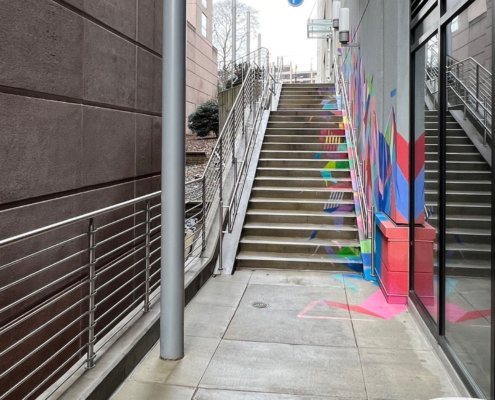
A stainless steel railing brings a different set of advantages that make it especially well-suited to the demands of aging commercial buildings. It doesn’t corrode, doesn’t need repainting, and holds its finish under the kind of daily contact and cleaning that high-traffic stairwells generate over decades. For buildings with exterior stair and balcony exposure, stainless steel is one of the most defensible long-term investments available.

It also adapts well to the dimensional variability that older buildings typically present, since it can be fabricated to precise measurements rather than forced into catalog assumptions. When the goal is a system that performs as well in year fifteen as it does on installation day, stainless steel is the material that consistently delivers on that promise.

How to Make the Business Case Internally

Getting ownership or a board to approve a stair railing upgrade in a 30-year-old building is easier when the pitch is framed around risk reduction and return. The aesthetics matter, but decision-makers who control capital respond to financial logic first. Here’s a framework that tends to move the conversation forward:

  • Document the current cost of maintenance on existing railing sections. Even a rough tally of recent years’ work orders makes the case for replacement more concrete
  • Get a property condition assessment or inspection report that flags railing deficiencies in writing, which creates a formal record of risk
  • Tie the project to an upcoming financing event, like refinancing, sale preparation, or a lease renewal cycle to give the upgrade a clear financial context
  • Frame the upgrade as a capital improvement, not a repair, so it’s treated as an asset investment in the budget process rather than an operating expense
  • Ask the right questions of your installation partner upfront. Understanding scope, phasing, and total cost clearly makes the selection process easier to present

Talk to P+P Artec About Your Building’s Upgrade Path

P+P Artec has spent more than 30 years designing, fabricating, and installing stainless steel and glass railing systems in commercial buildings of all ages and conditions, and our team can help you scope the right solution and plan around your building’s specific constraints.

Reach out to P+P Artec and start the conversation about what an upgrade looks like for your property.

More Like This